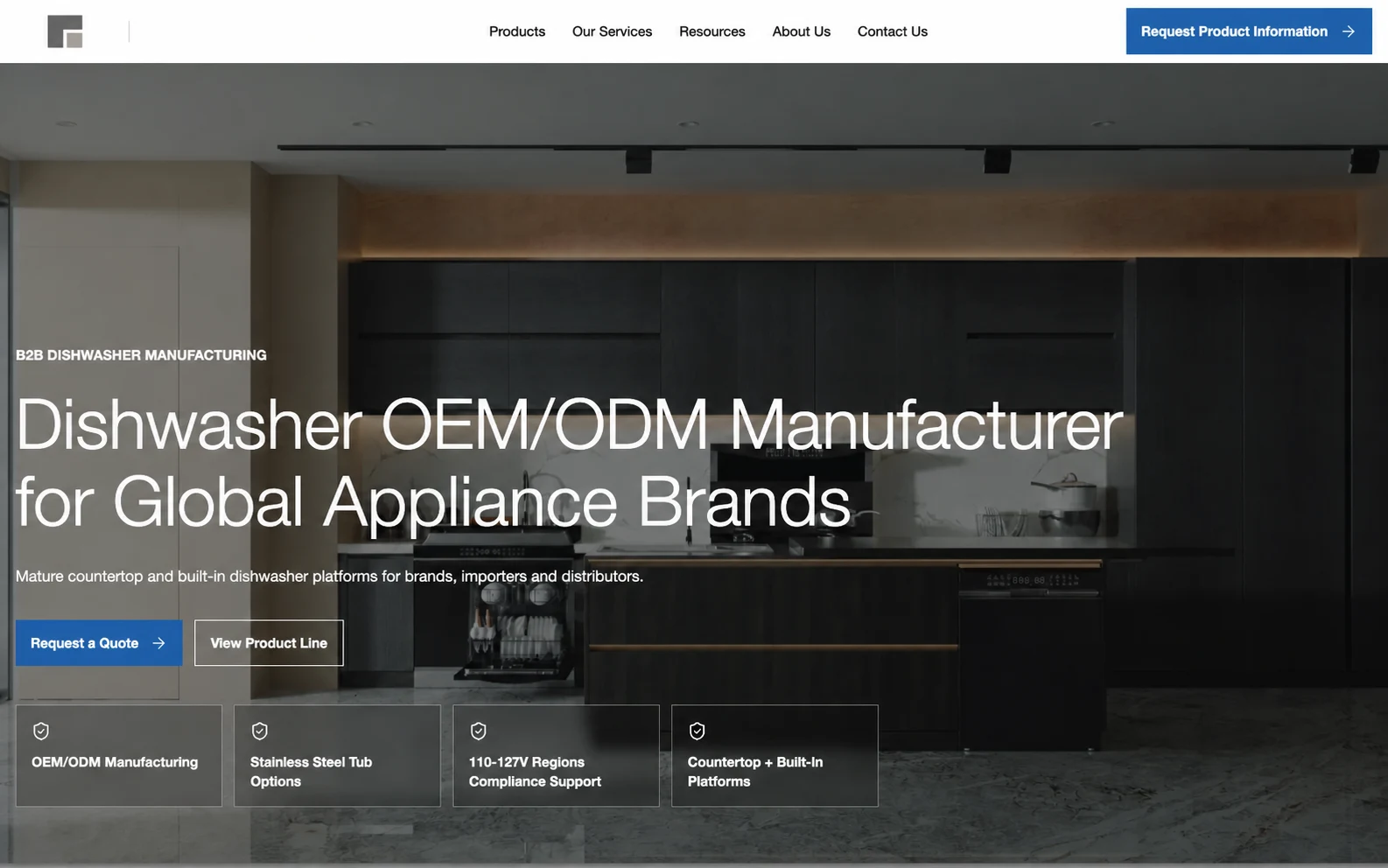
From company presentation to procurement inquiries
This manufacturer needed a website for overseas B2B buyers, both for inbound visitors and for salespeople to send during outreach. Buyers needed to assess whether the products suited their market, what support the company could provide and how to discuss a requirement.
I turned scattered catalogs, images and business materials into a website organized around procurement decisions, and connected inquiry submission to internal handling. The site is live, has received non-test customer inquiries, and the submission and handoff path has been used successfully.
The website now serves three practical purposes: helping buyers evaluate products, supporting sales outreach, and passing customer requirements into internal processing.
Organizing information around buyer decisions
A list of internal model numbers can show the range available without helping buyers decide whether a conversation is worthwhile.
I reorganized the materials by product platform and procurement task, prioritizing installation formats, target markets, buyer types, configuration options and items still requiring confirmation. Buyers can identify relevant product directions before discussing specifications and terms.
Services were expanded from general cooperation claims into specific brand, packaging and project support. Company and resource pages provide material for supplier assessment. Products, services and supporting information answer one question: Is this company worth including in the next round of supplier discussions?
Statements about model suitability, lead times, prices and certification stay within what the available materials support, so the website does not promise more than the business can confirm.
Sending procurement context into the sales process
A contact button does not mean a request has been adequately captured. With only a name and email address, sales still needs to establish what the customer wants to buy, their market and project timing.
I organized the form around customer type, target market, product interest, purchasing scale and timeline. Visitors have a clear way to describe their needs, and sales receives context for an initial assessment.
Working with an Agent, I implemented field validation, error feedback, duplicate-submission controls and internal lead handoff. Acceptance checks covered both the visitor-facing response and whether information actually reached the team’s handling point.
Acceptance extended from “the page opens and the form can be clicked” to “the customer’s request reaches the next handling step.”
Keeping content, design and technology aligned
The procurement journey informed architecture, content, design and implementation. Navigation helps people find products; detail pages support specification decisions; service information explains cooperation; inquiry routes provide the next action. The same information and access must remain usable on mobile.
SEO work covered titles and descriptions, URLs, the sitemap, structured data and older entry points. The purpose was to keep page topics, content relationships and accessibility consistent, rather than add isolated keywords.
Post-launch maintenance continues to check the product scope, accuracy of materials and key entry points, removing content that is no longer suitable for publication. That is what keeps the site usable as a sales resource.
My contribution and the verified result
I worked with an Agent across site architecture, content, design, implementation, SEO and the inquiry workflow. My focus was turning buyers’ evaluation needs into page content, then connecting their interest to internal sales handling.
The site is live and has received non-test customer inquiries that can enter the internal process. This confirms that visitors can submit requirements and that the information reaches the team’s handling point.
Inquiry counts and customer information are not public. I do not attribute existing inquiries to a particular page or SEO change, and do not claim completed sales, revenue or sustained off-site growth as validated results of this phase.