Focusing early work on a defined brand and website
This project targets overseas B2B procurement of medical consumables. Several categories were available to explore, but product documentation, imagery and target-market information varied in completeness. Developing everything at once could produce broad page coverage without the information buyers actually need.
Starting with procurement needs, existing product materials and market and reference research, I narrowed the first version to respiratory care and planned the brand, content and website around it.
The team gained a clear buyer focus, initial content scope and list of information gaps. Brand and website production now had a concrete brief.
Letting the available evidence constrain launch scope
I considered product directions, documentation requirements and cooperation routes together: what can be organized from current materials, which specifications, images and documents need confirmation, and what should remain research rather than enter the first release.
This turned a broad business idea into page requirements and open questions. Visual identity, copy and implementation could proceed within the same scope, with clarity about who needed to supply which information next.
Market research informs direction but does not prove product capability. The initial scope must respond to buyers’ needs and stay within what the available documentation supports.
Designing the first site for supplier assessment and inquiries
The intended buyers include importers, distributors and OEM/ODM customers. They need to understand the range, specifications, documentation, packaging and cooperation terms, then confirm their requirements through discussion.
The first version was therefore planned around understanding products, reviewing specifications and materials, requesting a quote or sample, and continuing with the business team. Public pricing, a cart and online payment are outside the current scope.
Product pages narrow the choice; quality and documentation content support supplier assessment; cooperation and inquiry routes lead to the next conversation. The first site provides a basis for B2B procurement discussions without spending on retail features that do not fit the current model.
Preparing evidence before design is finished
When organizing product content and assets with an Agent, I check more than their existence: sources, clarity, SKU correspondence and external-use status also matter. A sharp image may still show the wrong model, and one document does not automatically cover every product or market.
These checks are part of page preparation, so publication readiness and gaps are visible during production. Product qualifications and external claims still need confirmation for the specific product and target market.
This gives pages a reviewable basis and keeps uncertainties explicit, preventing brand presentation from making promises the business has not confirmed.
Supporting professional assessment without implying maturity
I worked with an Agent on the logo, visual identity and website direction, carrying color, layout and information hierarchy into product materials, procurement pages and inquiry guidance. The emphasis is clarity, professionalism and readability.
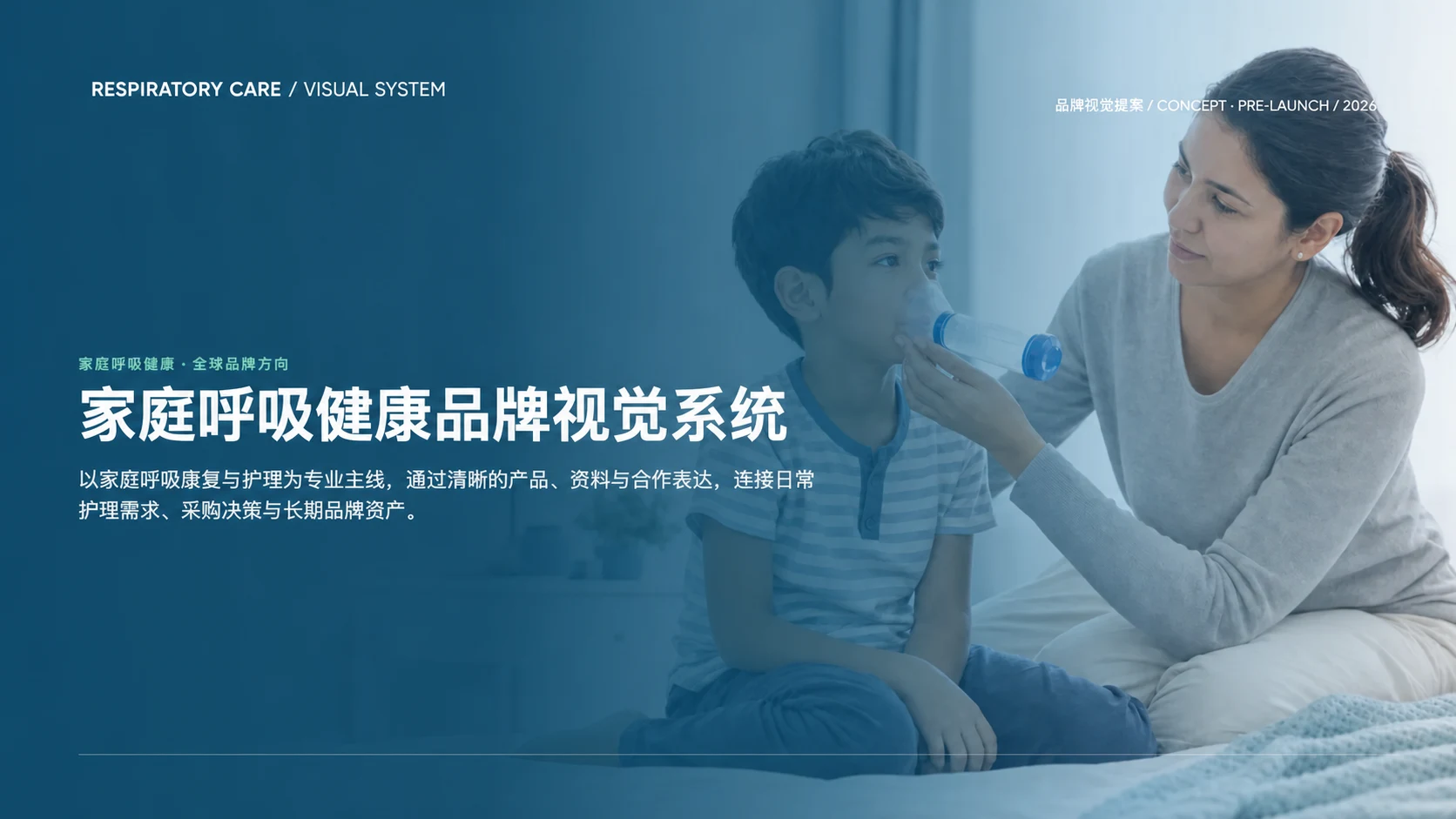
Product-documentation images present information that can be checked. People in contextual scenes, packaging concepts and page mockups support discussion of visual direction and use contexts; they do not prove actual products, production capability or outcomes.
A shared visual system lets the brand and procurement content follow consistent rules without presenting a B2B supplier project as a general wellness consumer brand.
My contribution and the current stage
I connected initial scope decisions to brand and website preparation, working with an Agent on the logo, visual identity, content framework and internal site foundation, and organizing material requirements and visual concepts.
The current result is a preparation plan and foundational assets built around defined buyers, launch scope and documentation conditions. The team can use them to complete content, confirm product information and prepare for launch.
The project is not publicly live and has not received inquiries. Brand and website preparation do not mean products are in mass production, certified or eligible for sale in every market, and are not evidence of commercial returns.