- Audience
- People exploring AI-assisted work, services or an early business idea.
- Topics
- Personal experience, Agent collaboration and business judgement.
- Format
- 42 Chinese slide images with English notes only where they add to the slide, an interactive demonstration and a recording link.
Opens in Feishu; sign-in or access permission may be required. Public playback has not been verified.
How to use this course
The course follows the V4 session: personal experience, working with Agents, then nine questions for examining a real opportunity. The images retain the original Chinese slides; notes below them only add judgement, context or a practical method not already expressed on the slide.
Bring one project of your own. Separate what you know from what you assume, identify the most important uncertainty, and decide what a small next test would look like. My brand and AI product work described here is still at an early stage.
Read at your own pace. Slides retain the original Chinese; only teaching notes that add to a slide appear below it.
Open slide demonstrationOpening: from an idea to a business



I am Yuli, an outbound Vibe Marketing practitioner. I have worked on B2B and B2C marketing projects for overseas markets. I am now building a DTC brand from the beginning and working with a team on a marketing-focused AI application. Both are at an early stage. This course shares the experiences and thinking behind that work.

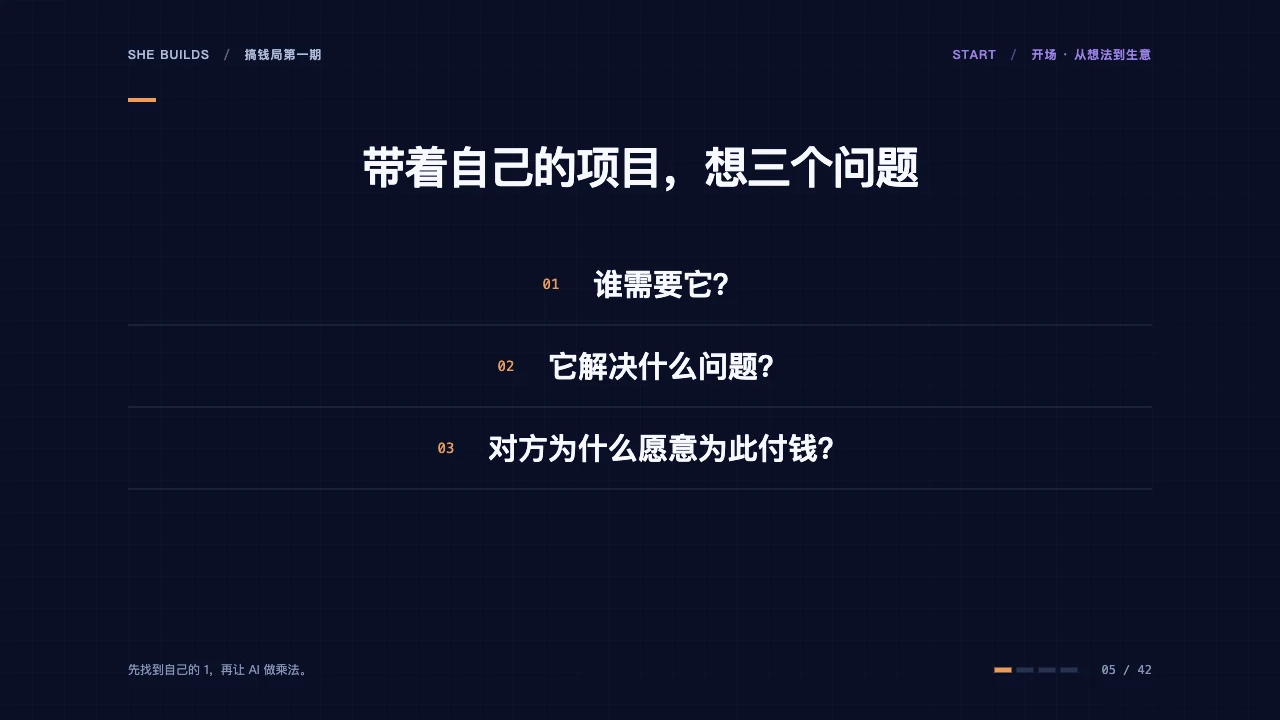
You may be considering AI-generated images or video, websites or software made through Vibe Coding, content creation, or a service business. Bring one of your own ideas to the course and keep three questions in mind:
Who needs it? What problem does it solve? Why would someone pay for it?
I will start with my experience, then discuss working with Agents and deciding whether an opportunity deserves investment.
Finding your “1”: what you want and what you already have
The question I could not answer


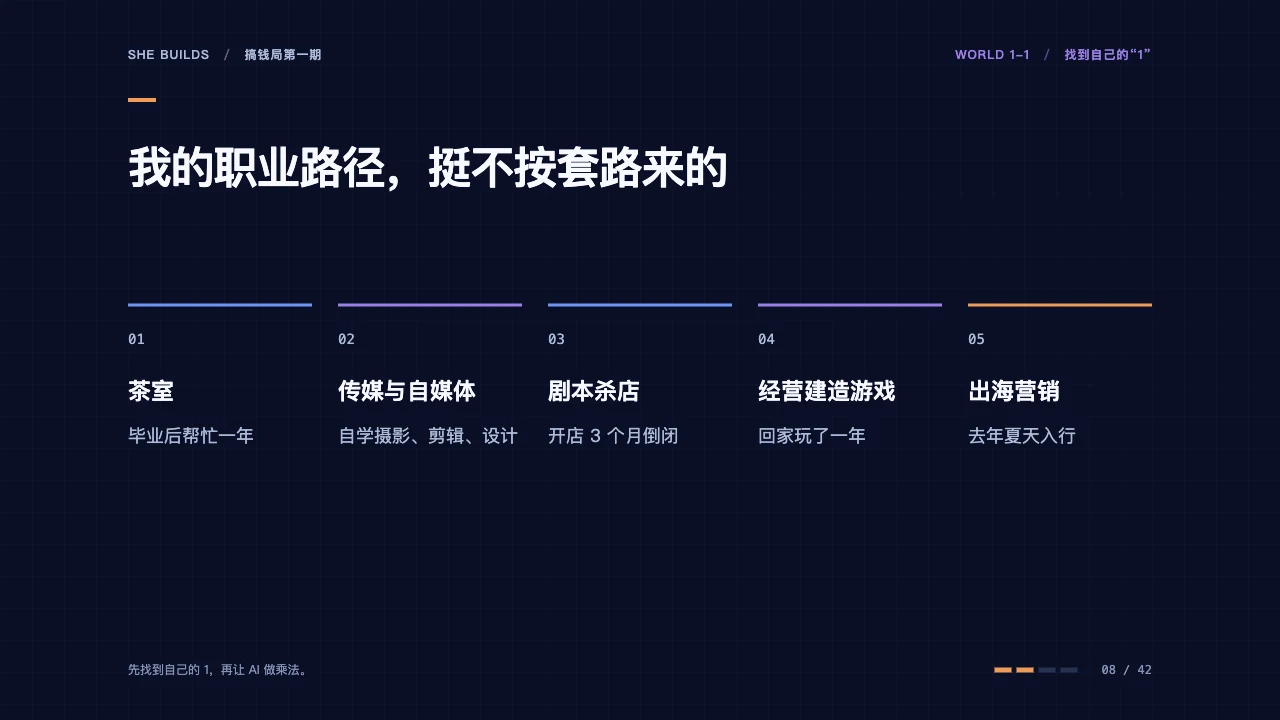

Do you have a clear goal for your life? I did not. My career path has been unconventional. After graduating, I spent a year helping at my mother’s tea room. I taught myself photography, editing and design, worked at two media companies and tried content creation. Short dramas and AIGC were attracting attention, but I disliked production driven by volume, similarity and the next trend.
I was unhappy with the work and unclear about the next step, so I left and opened a murder-mystery game venue. It closed after three months. After that setback, I spent a year at home playing games, especially management and building games such as Civilization and Oxygen Not Included.
Last summer, a mentor introduced me to outbound marketing. She asked: “What is your goal in life?”
I could not answer. “Playing games” did not seem like an answer. The question made me realise that I kept looking for jobs and opportunities without thinking much about the life I wanted or the work I could keep caring about.
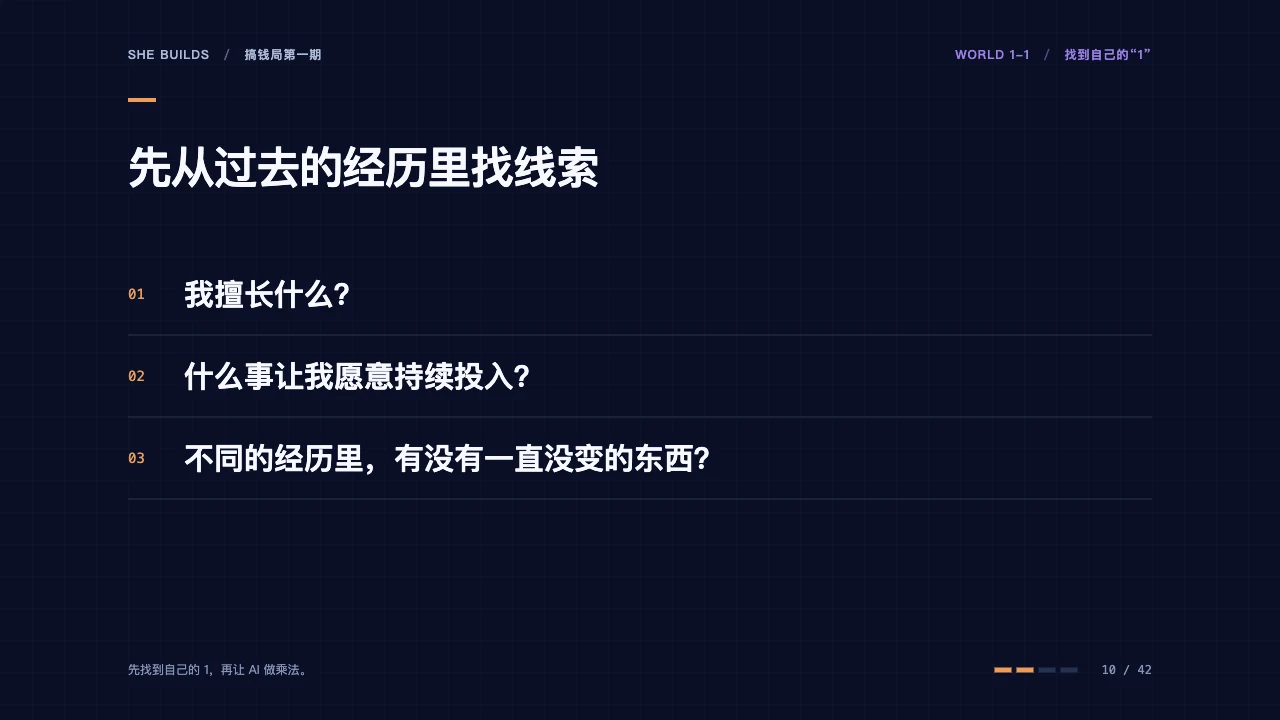
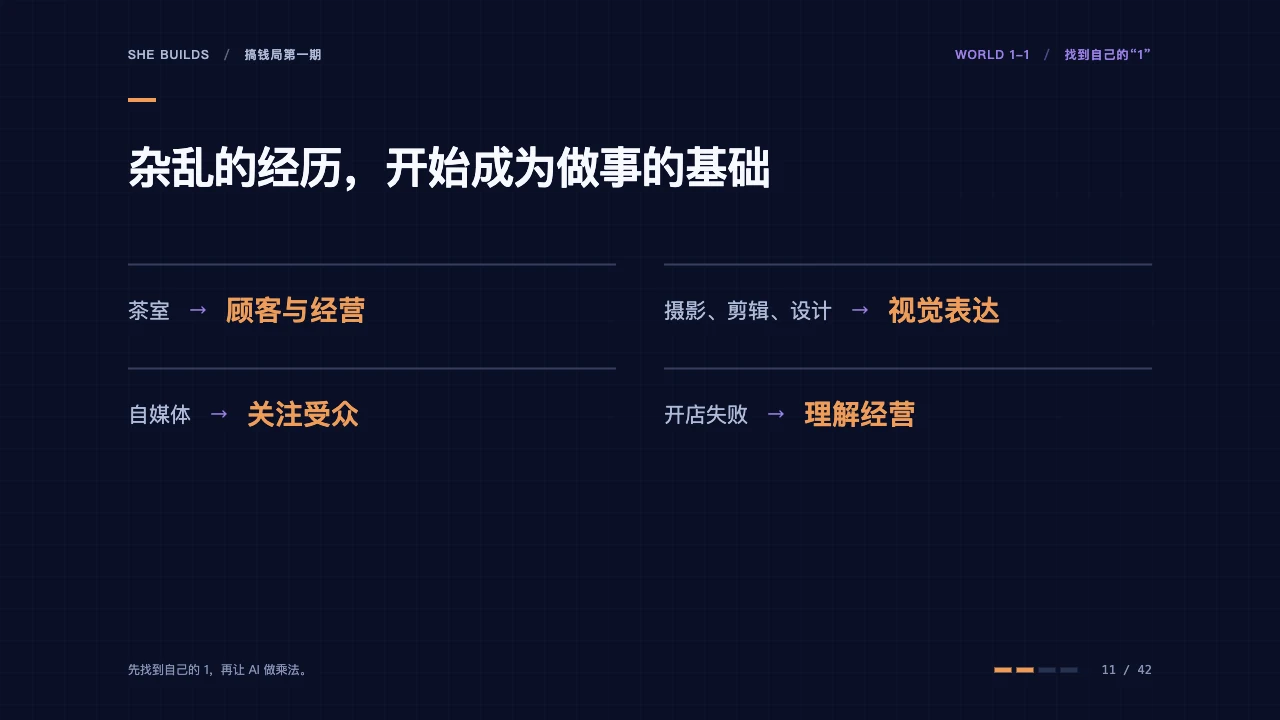

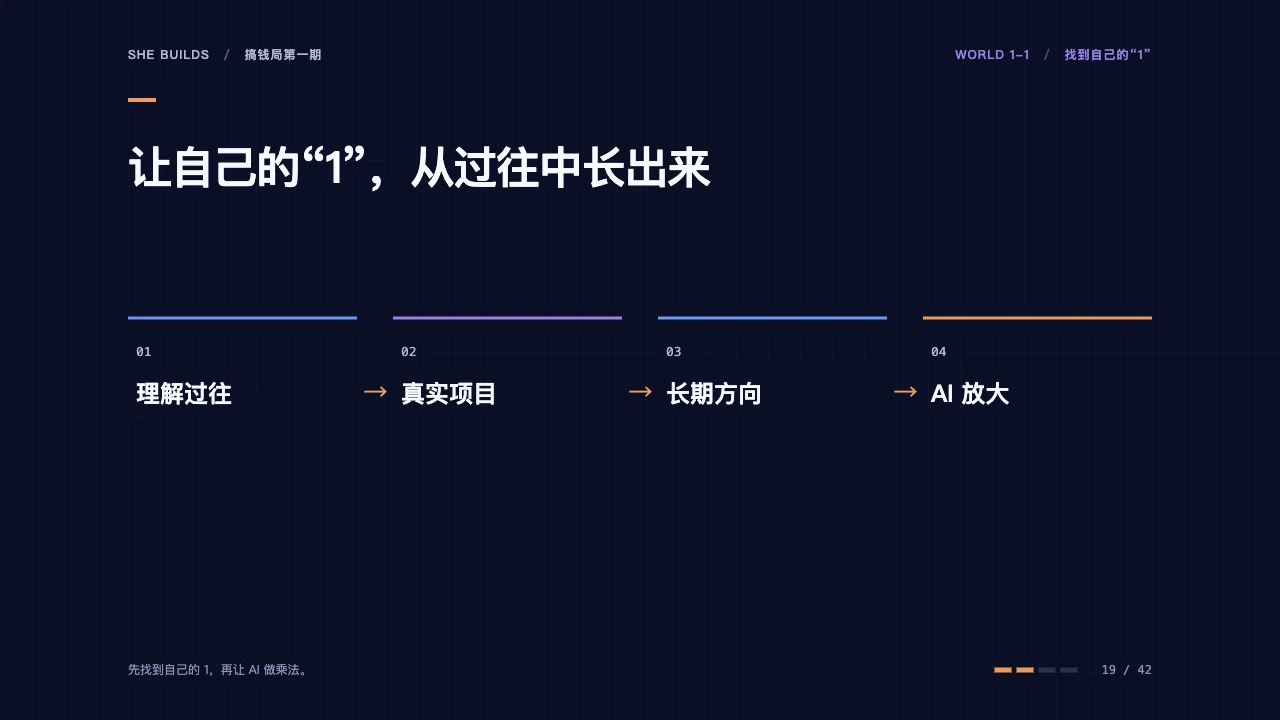
The tea room exposed me to customers and running a business. Photography, editing and design gave me a foundation in visual expression. Content creation made me think about audiences. The failed venue taught me that liking something does not mean knowing how to run it as a business.
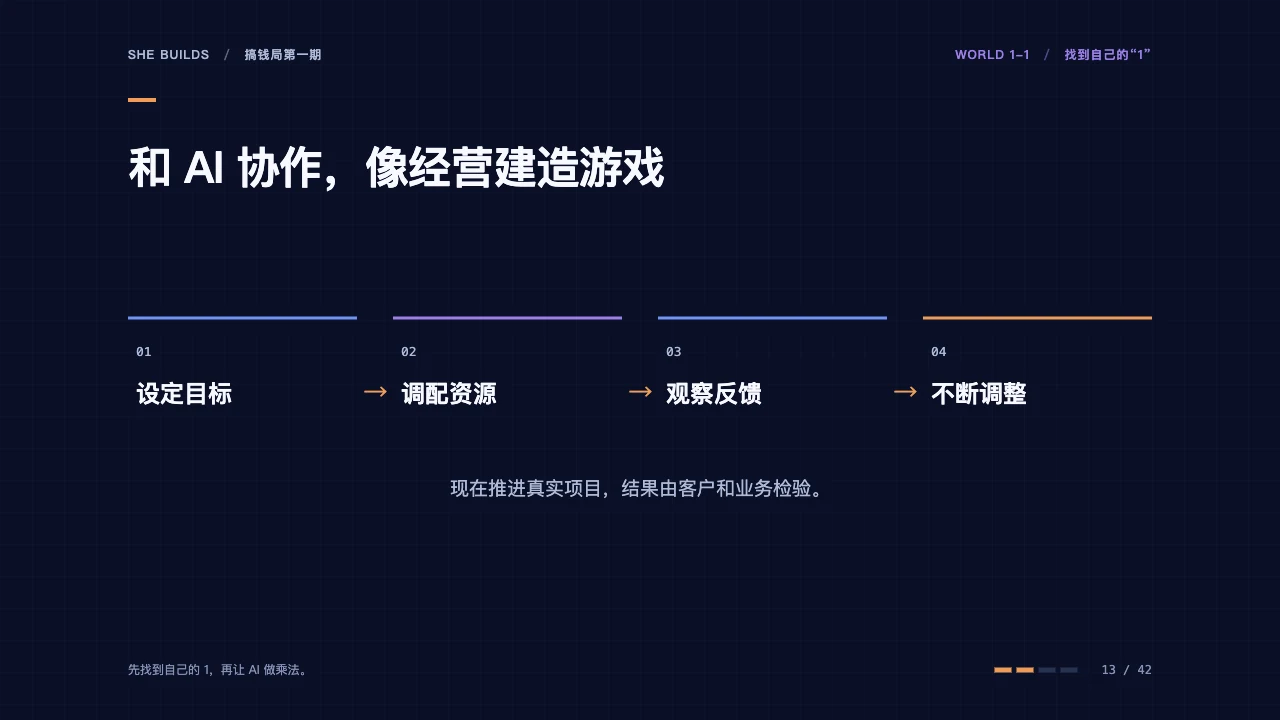
Looking back at those management games, I was most interested in allocating resources, finding bottlenecks and improving how a system worked. When I started using Codex in April, I recognised a similar enjoyment: set a goal, allocate resources, observe feedback and adjust.
There is an important difference. I used to optimise a system inside a game. Now I must judge what is worth doing, work with AI and people on real projects, and let customers and business results test the outcome.


Not every experience is worth repeating, but every experience is worth understanding.
What once seemed scattered began to form a foundation for my current work. AI helped me connect those experiences and attempt things that had previously been constrained by technical skills or resources.

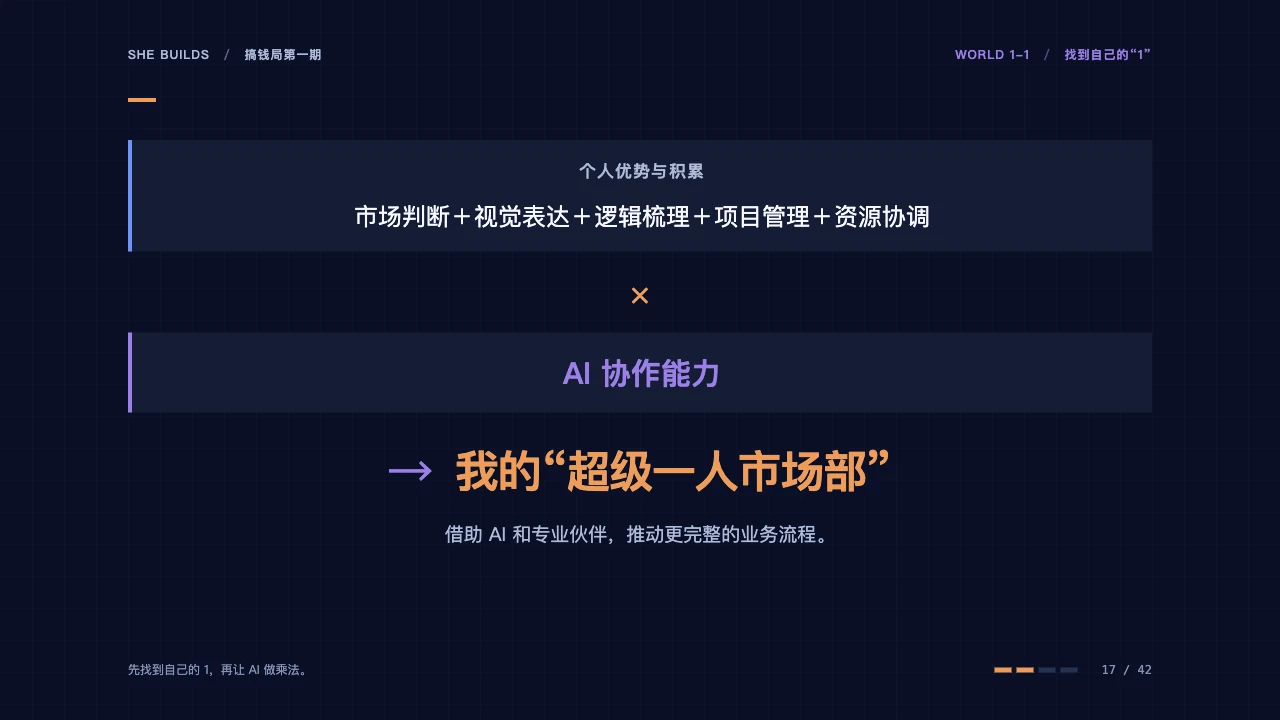
That phrase does not mean mastering every profession or dispensing with a team. It means using AI and specialist partners to take responsibility for a more complete business process.
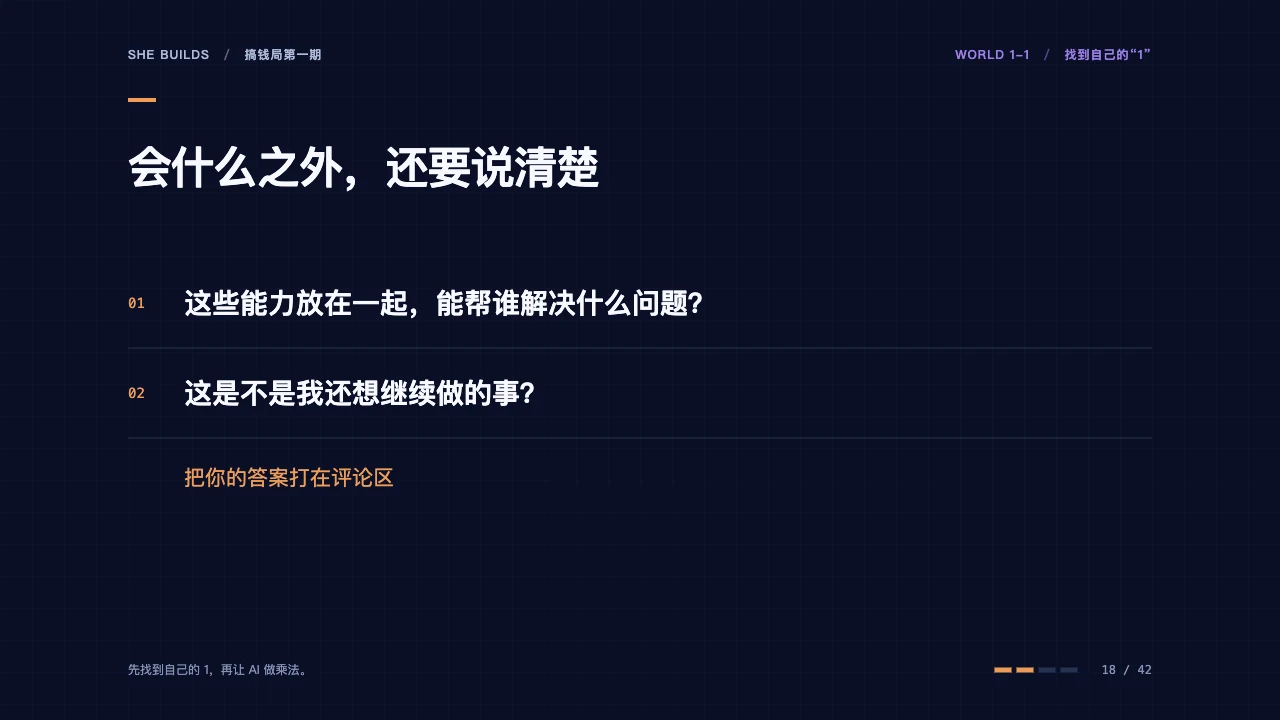
Building my personal website pushed the thought further. A list such as “photography, design, marketing” was not enough. Together, whose problem could these abilities solve? Was that work I wanted to keep doing?
How I work with Agents

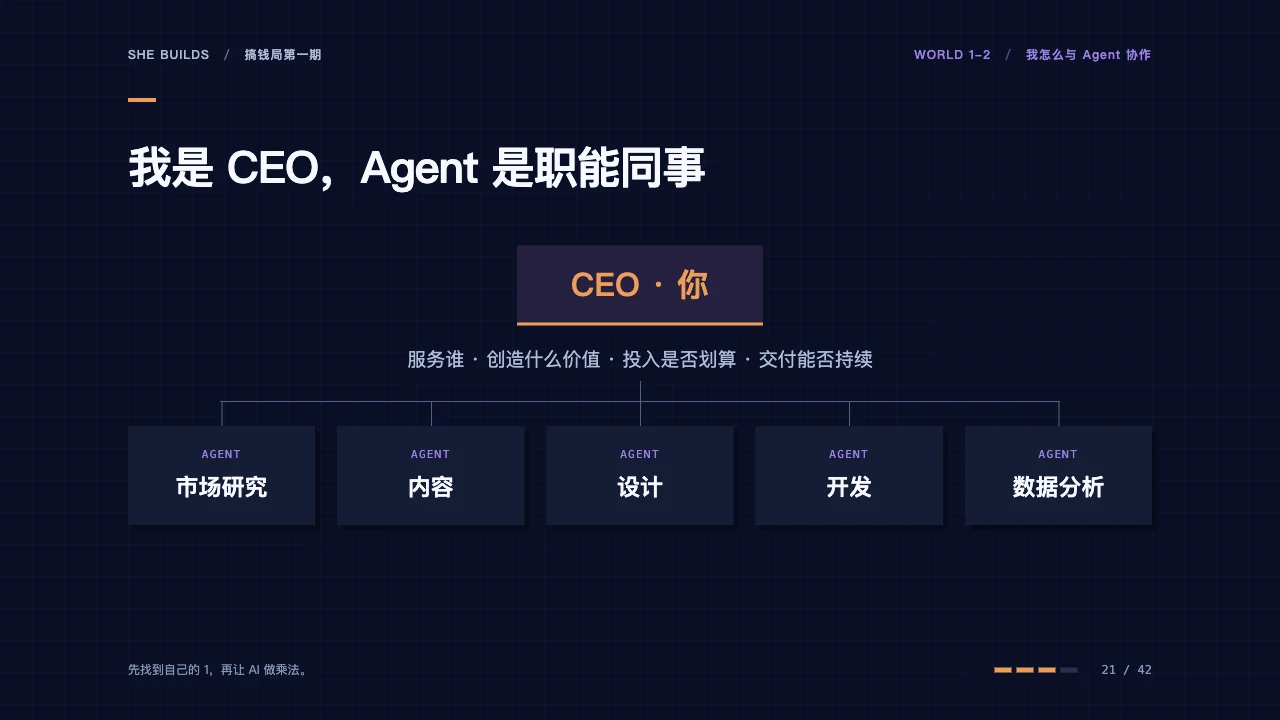
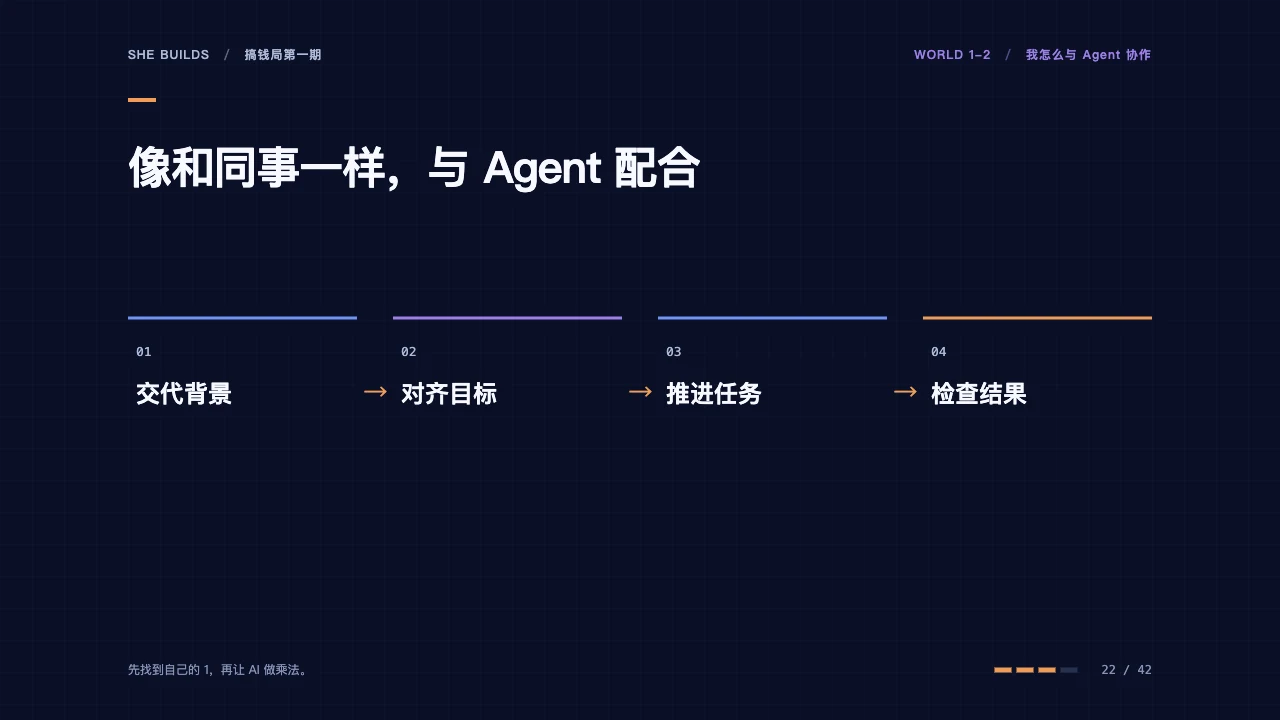
Working together involves the same basics as working with people: provide context, agree on goals, move the task forward and inspect the result.
But I still have to decide whom the company serves, what value it creates, whether the investment makes sense and whether delivery is sustainable.


How I examine an opportunity


AI makes ideas easier to build. It also makes it easier to feel satisfied simply because something has been built. In real business, I need another question: once it exists, who gains what?

For a website, page and feature counts describe completed work. I care more about whether buyers understand the product, resolve doubts and find it easier to start a conversation.
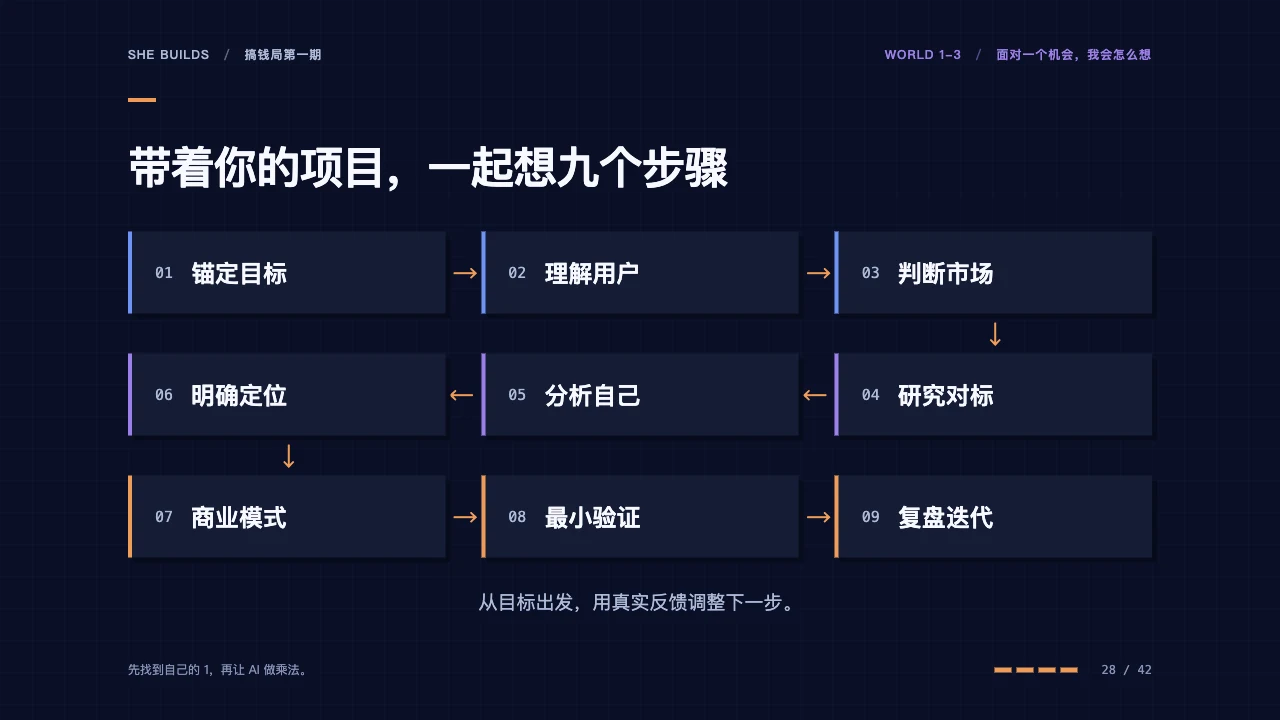
1. Set the goal: what do I want from this?
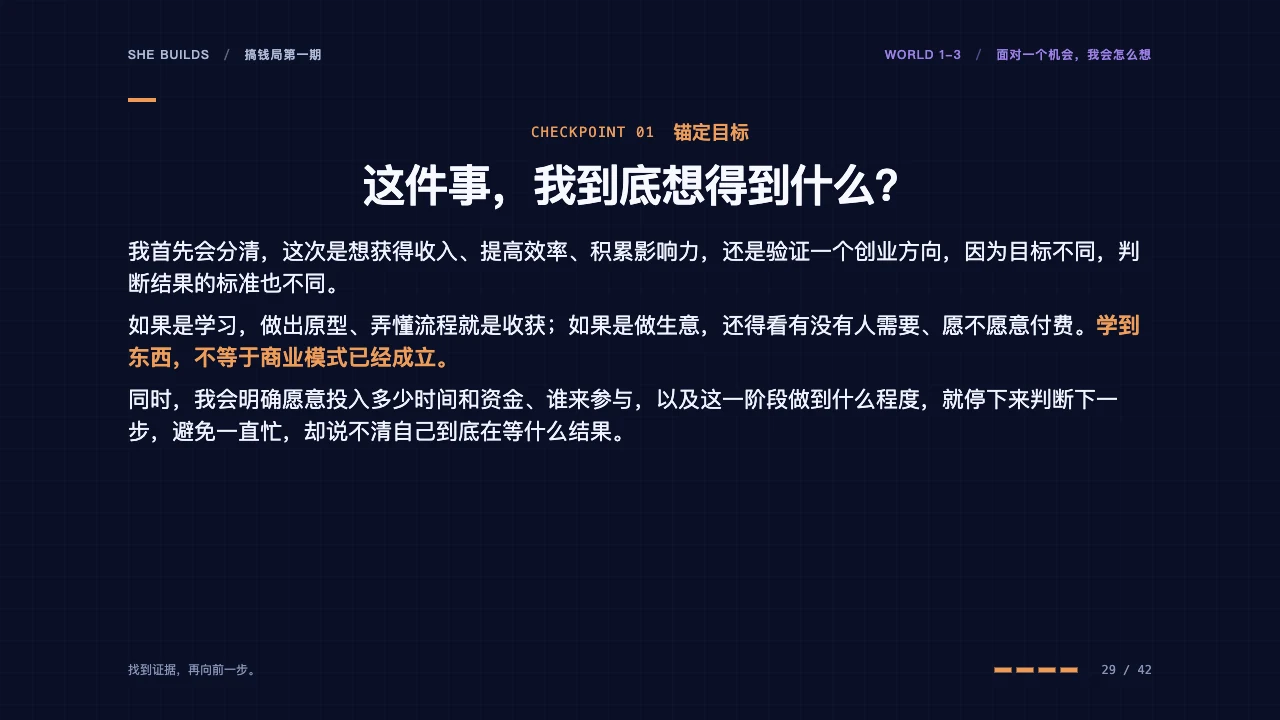
First I distinguish between earning income, saving time, building influence and testing a business direction. Different goals require different measures.
For learning, a working prototype and an understood process can be a useful result. For a business, I also need evidence of demand and willingness to pay. Learning something does not establish a business model.
I define the time and money I am willing to invest, who will participate, and the point at which I will stop to judge the next step. Otherwise I can remain busy without knowing what result I am waiting for.
2. Understand the user: who actually needs it?
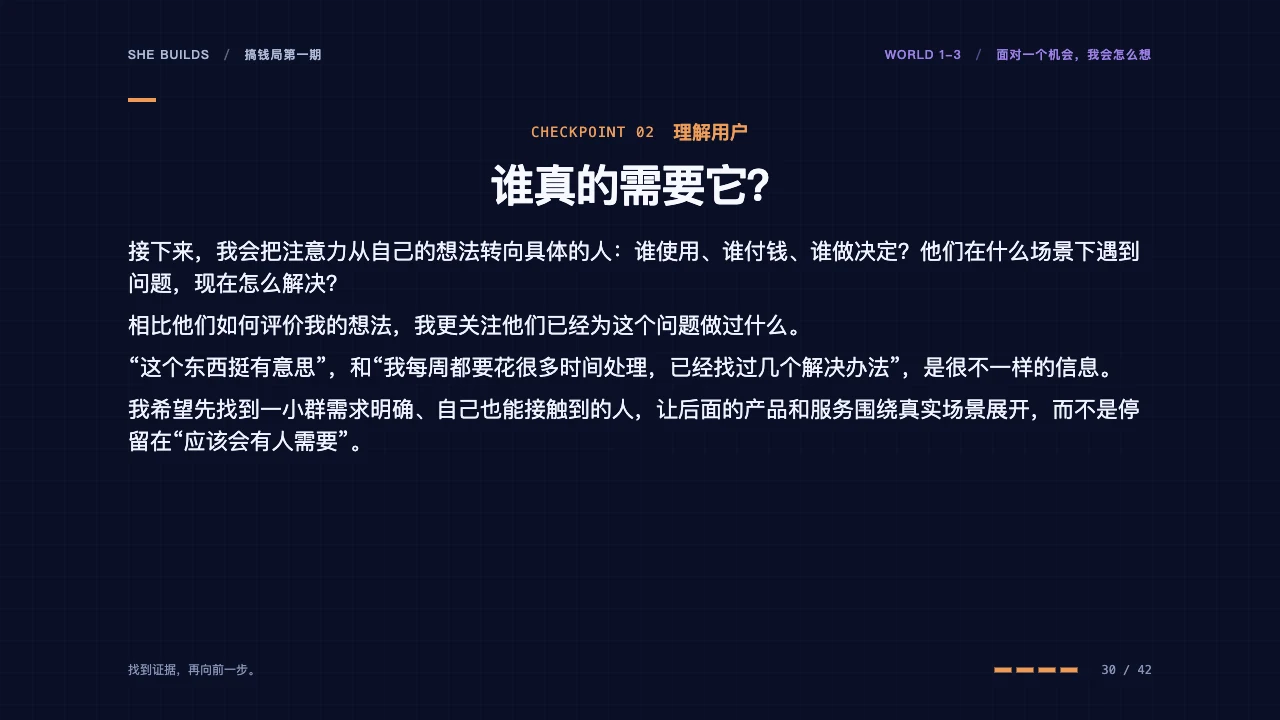
I shift attention from my idea to specific people. Who uses it, who pays, and who decides? In what situation does the problem occur, and how is it handled today?
I care more about what people have already done about the problem than how they rate my idea.
“That sounds interesting” is very different from “I spend hours on this every week and have already tried several solutions.”
I want to find a small group with a clear need whom I can actually reach. The product or service can then grow around a real situation rather than the assumption that someone must need it.
3. Assess the market: how far can this demand take me?
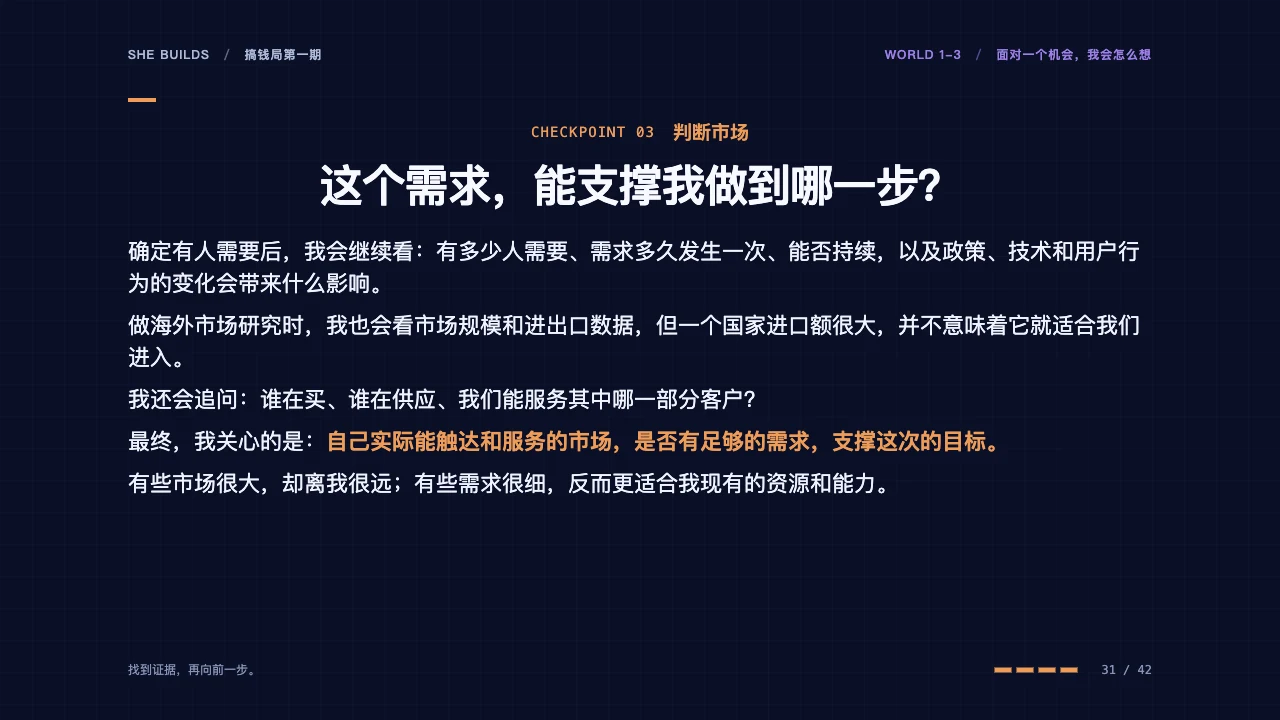
Once I find demand, I ask how many people share it, how often it arises, whether it will last, and how policy, technology or behaviour could change it.
In overseas market research I look at market size and trade data, but a country’s large import value does not automatically make it a suitable market for us.
Who is buying? Who is supplying? Which part of that customer base could we serve?
The useful question is whether the market I can realistically reach and serve has enough demand to support this project’s goal.
Some large markets are far beyond my reach. Some narrow needs fit my existing resources and abilities much better.
4. Study alternatives: how do others solve it and earn money?
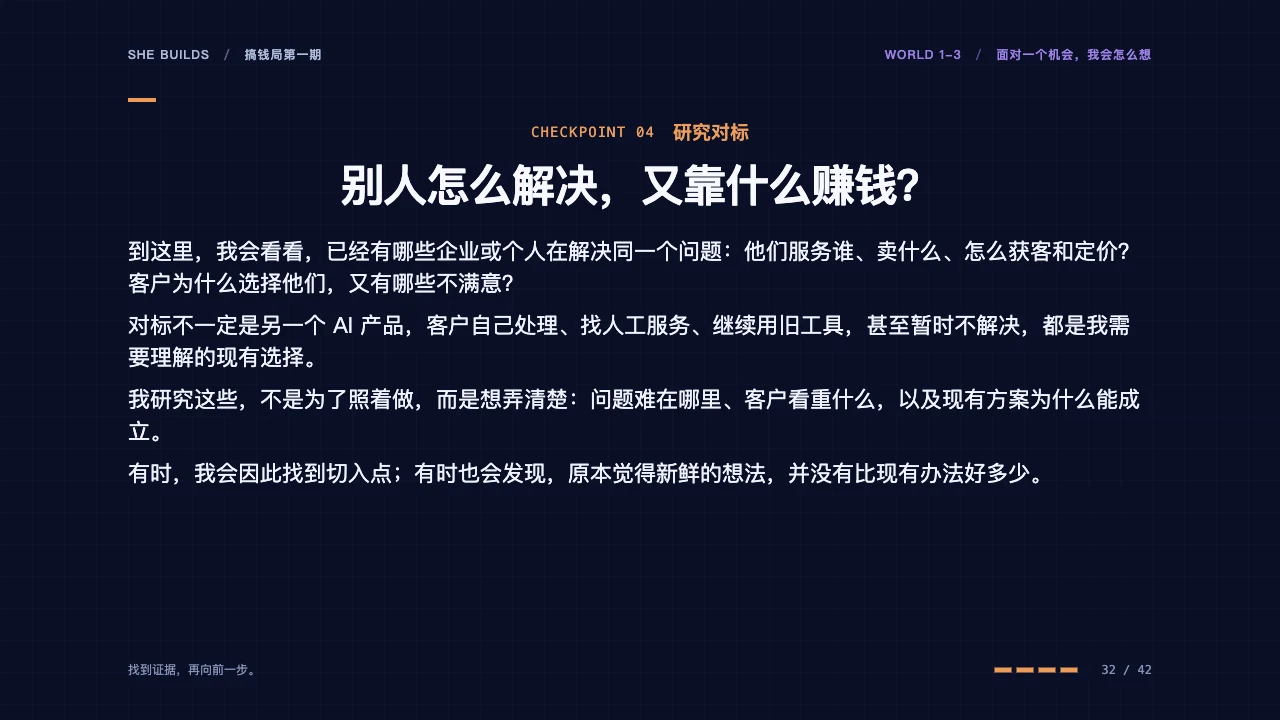
I look at people and companies already addressing the problem: whom they serve, what they sell, how they attract customers and price the work, why customers choose them, and what disappoints those customers.
An alternative does not have to be another AI product. Doing it in-house, hiring a person, using an older tool or leaving the problem unresolved are also choices worth understanding.
The purpose is to learn where the difficulty lies, what customers value and why existing approaches work.
Sometimes that reveals an opening. Sometimes it shows that an idea I found novel is not much better than the available options.
5. Assess yourself: is this an opportunity for me?
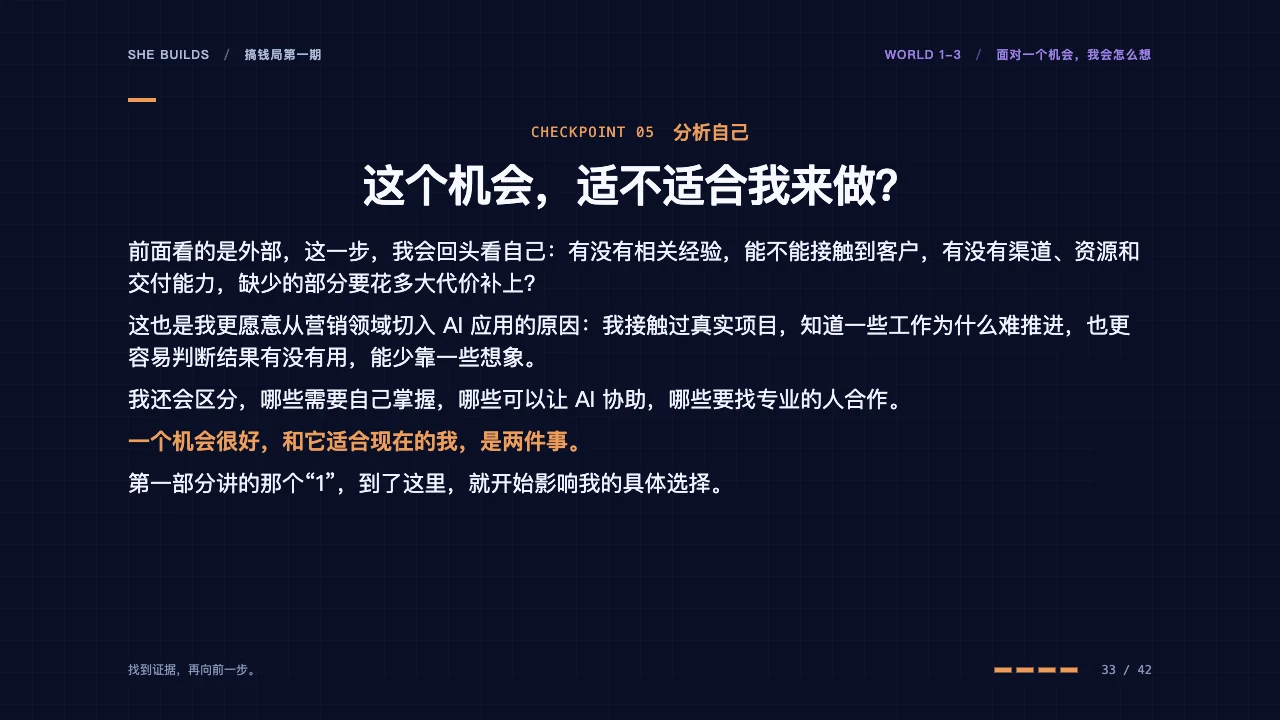
After looking outward, I examine my own position. Do I have relevant experience, access to customers, channels, resources and delivery capacity? What would it cost to fill the gaps?
This is one reason I prefer to approach AI applications through marketing. Real project experience helps me understand why work becomes difficult and whether a result is useful. I can rely less on imagination.
I separate what I need to understand myself, what AI can assist with and what requires a specialist partner.
A good opportunity and an opportunity that suits me now are not the same thing.
The “1” from the first part of the course begins to shape specific decisions here.
6. Define your position: why would a customer choose you?
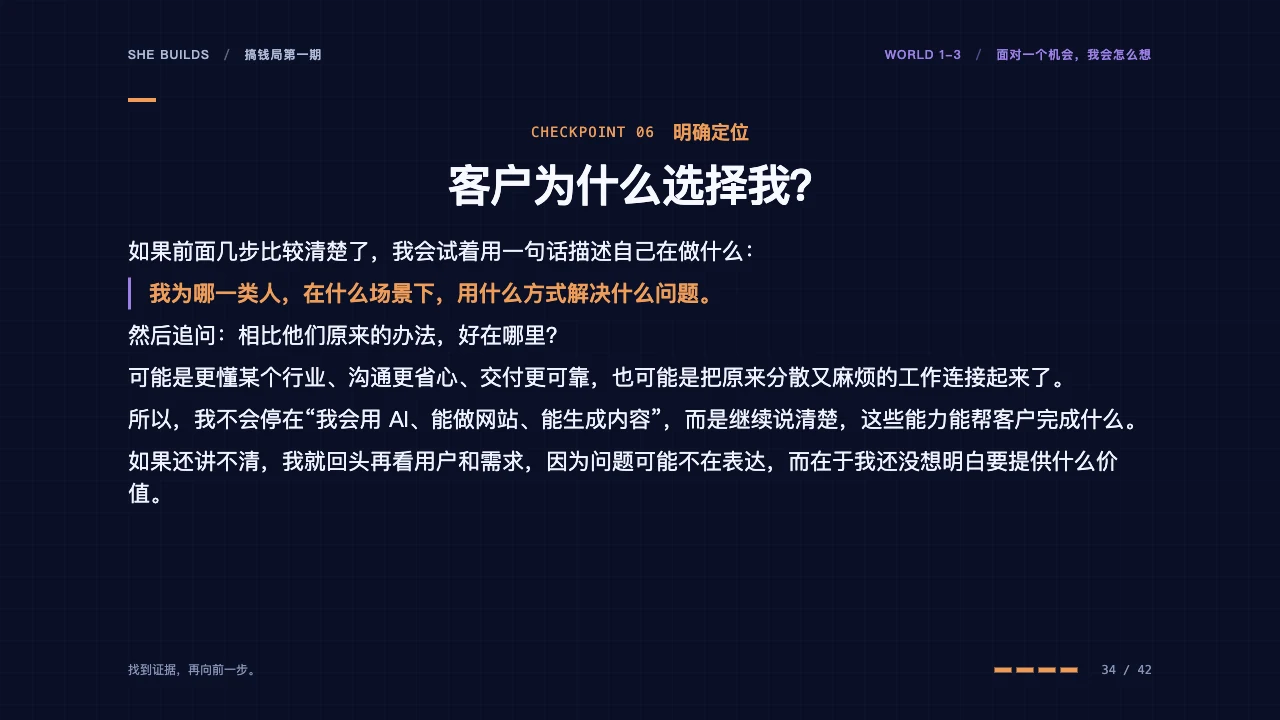
If the earlier questions are clearer, I try to describe the work in one sentence:
For which people, in which situation, do I solve which problem, and how?
Then I ask what improves on the customer’s existing approach.
It may be deeper industry understanding, easier communication, more reliable delivery, or connecting work that was previously fragmented and inconvenient.
I do not stop at “I use AI, build sites and generate content.” I explain what those abilities help a customer accomplish.
If I still cannot explain it, I return to users and their needs. The issue may be unclear value rather than poor wording.
7. Check the business model: can this continue?
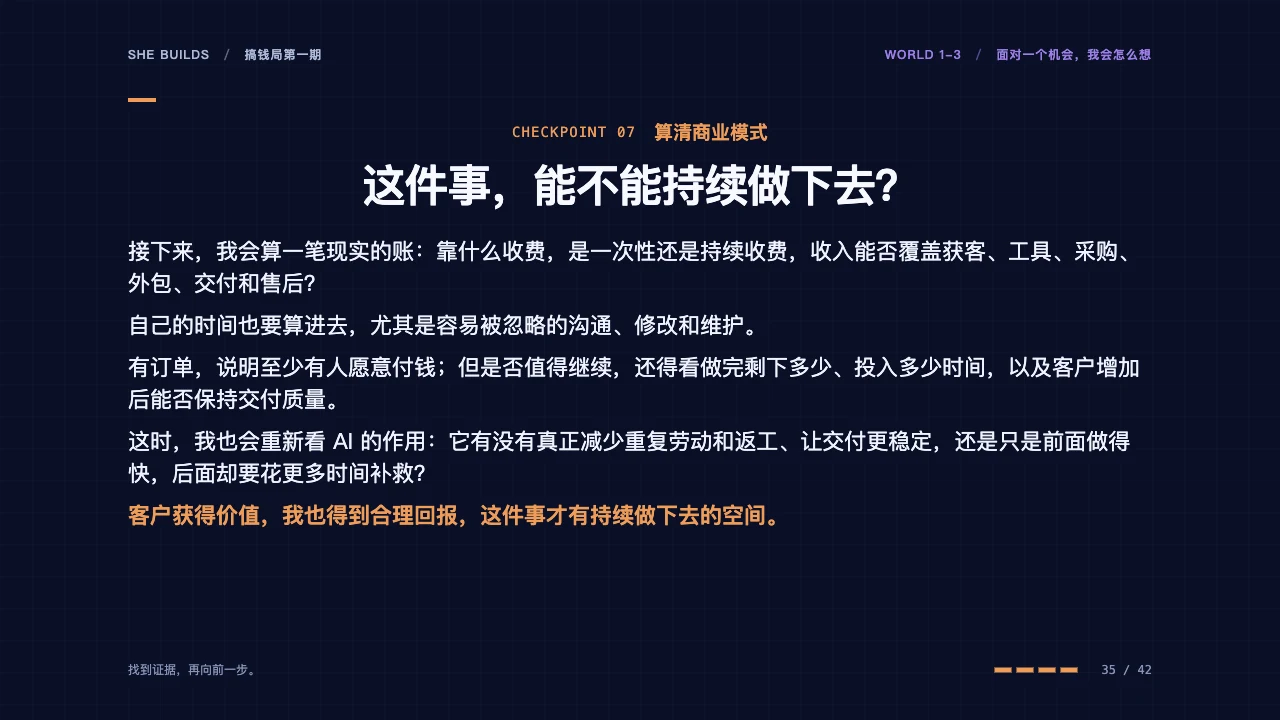
I calculate what pays for the work: one-off or recurring fees, and whether revenue can cover acquisition, tools, purchasing, outsourcing, delivery and aftercare.
My own time belongs in the calculation, especially communication, revisions and maintenance that are easy to overlook.
An order shows that someone was willing to pay. Whether to continue depends on what remains after delivery, how much time it required and whether quality can hold as customer numbers grow.
I also reconsider AI’s contribution. Did it reduce repeated work and rework and make delivery more reliable, or did speed at the beginning create more repair work later?
The customer needs value and I need a reasonable return for the work to remain sustainable.
8. Run a small test: examine the most important uncertainty
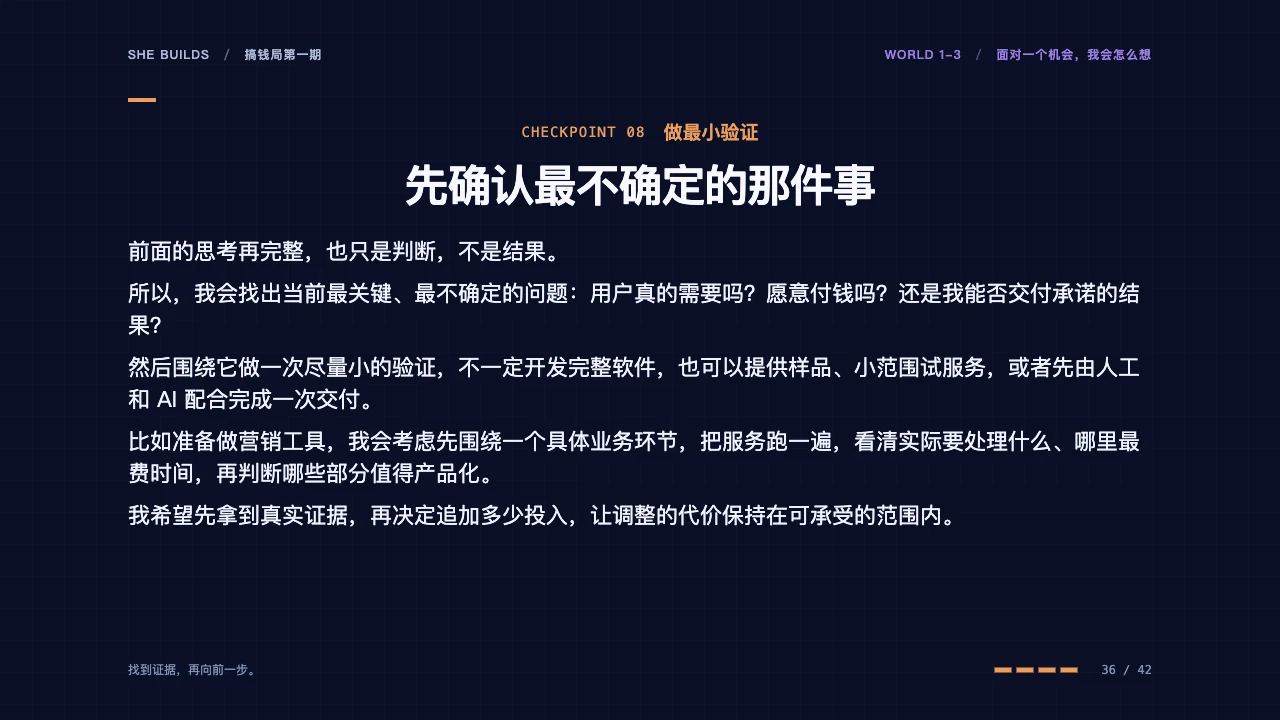
Even careful reasoning is still a judgement, not a result.
I identify the most important unresolved question: is the need real, will someone pay, or can I deliver the promised result?
Then I design a small test around it. That need not be complete software. It could be a sample, a limited service trial or one delivery carried out jointly by a person and AI.
For a marketing tool, I might first run a service through one concrete business task, learn what it actually requires and where the time goes, then decide what is worth turning into a product.
I want evidence before increasing the investment, while keeping the cost of adjustment manageable.
9. Review and iterate: did the result match the judgement?
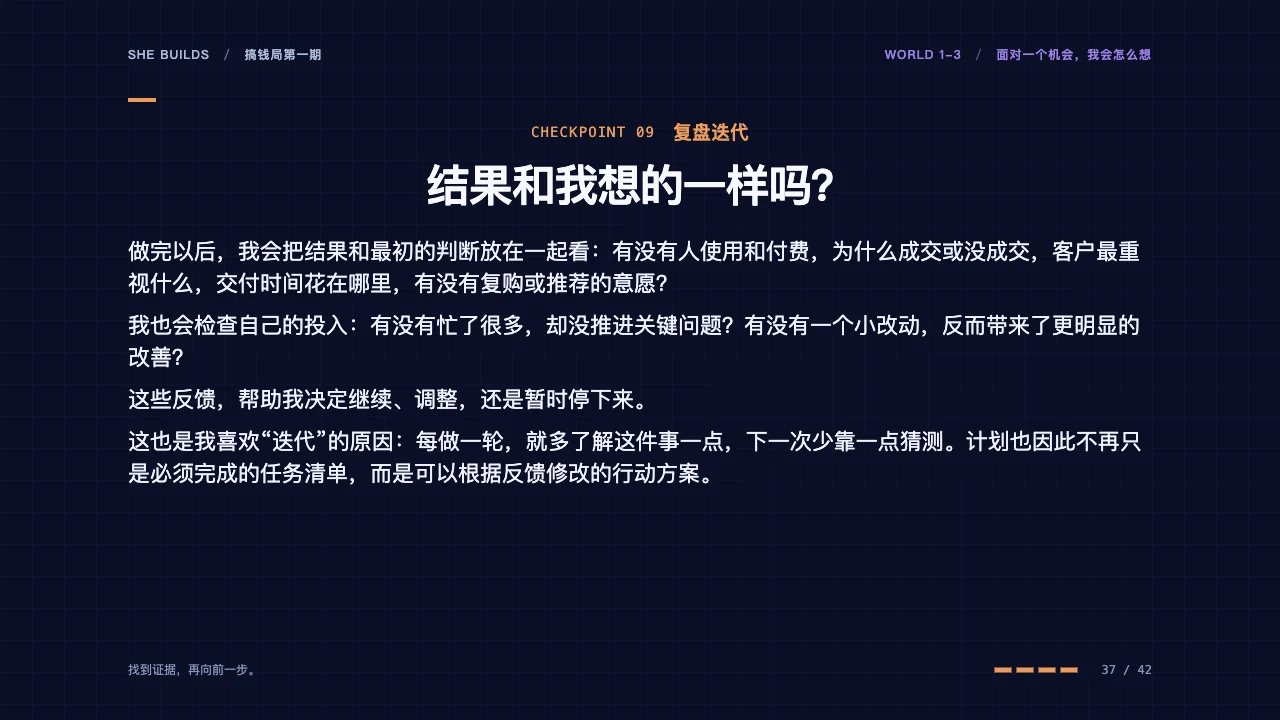
After the test, I compare the result with my starting assumptions. Did anyone use it or pay? Why did a sale happen or fail? What mattered most to the customer? Where did delivery time go? Was there interest in buying again or recommending it?
I inspect my effort too. Was I busy without advancing the important question? Did one small change make a more noticeable difference?
The feedback helps me decide whether to continue, adjust or pause.
That is what I value about iteration: each round teaches me more and leaves less to guess next time. A plan becomes something that can change with evidence, rather than merely a list of tasks to finish.
Applying the questions to our own product exploration
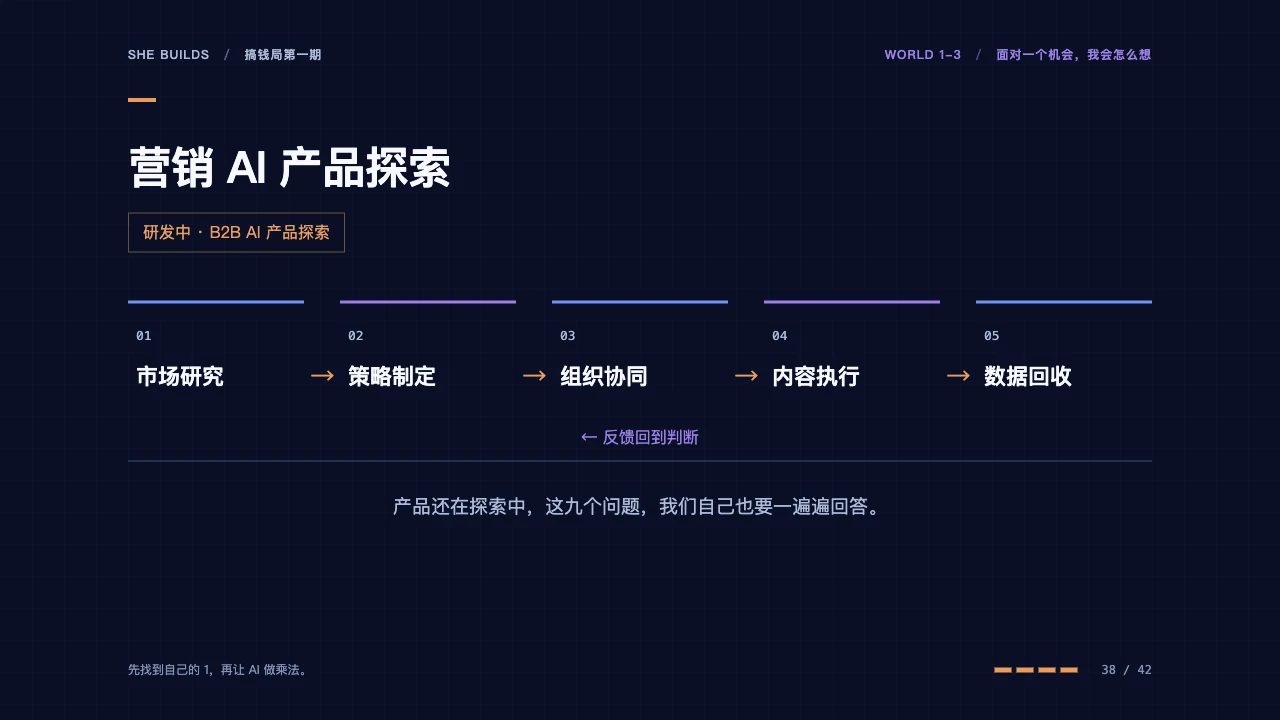
These nine steps are also part of what my team and I are trying to develop through a marketing AI product.
We hope to connect market research, strategy, team coordination, content execution and feedback. Research supports business choices, strategy guides execution, and observed feedback shapes what comes next.

AI can help organise material, analyse feedback, draft content and break down tasks. What to investigate, what to trust and which trade-offs to make still require business judgement.
We want small teams to spend less time repeatedly organising and producing materials, and more time with customers, judgement and decisions. The product is still being explored. We have to keep answering these nine questions ourselves.
Summary and a practice task

Return to the central idea: find your “1”, then let AI multiply it.
My own “1” is still becoming clearer. I have not resolved every question about my life, but I am learning what I enjoy, what I want to keep doing and how past experience can become useful capability.
Working with Agents gives those experiences more room to develop. Feedback from real business helps me judge which work deserves continued effort.
Instead of only asking what AI can do for me, I ask:
What do I want to do? What do I already have? Together, what value could those things create, and for whom?